Aero Portfolio
Aircraft are where I first fell for engineering. This page collects the aerospace work I did as an undergraduate engineering student at Thapathali Campus in Nepal: a glass-fibre composite monocoque fuselage for a 3-metre wingspan RC aircraft, a Pixhawk-powered autonomous quadcopter, my final-year autonomous fixed-wing UAS for wildlife patrols, and the Boeing Aeromodelling Competition at IIT Bombay, first as a competitor in 2019 and then as a mentor in 2023.
The projects
| Project | What it is | Key tools |
|---|---|---|
| Composite monocoque | Glass-fibre monocoque fuselage for a 3000 mm wingspan RC aircraft, made from a 3D-printed mold core | CAD · 3D printing · 250 GSM glass fibre |
| Autonomous quadcopter | Pixhawk quadcopter flying manual and GPS-based autonomous missions | Pixhawk · GPS · flight planning |
| Wildlife UAS | Final-year autonomous fixed-wing UAV for national-park patrol support, 20+ test flights | XFLR5 · Pixhawk · Mission Planner |
| Boeing Aeromodelling | IIT Bombay: top 20 as a competitor (2019), First Runner-up as a mentor with a 600 g payload (2023) | Aircraft design · fabrication |
Glass-fibre composite monocoque body
A hollow, one-piece fuselage for a 3 m wingspan RC aircraft. I designed and fabricated it at Thapathali Campus, IOE, under the guidance of Lecturer Biman Rimal.
The goal was to fabricate a lightweight monocoque composite body for an RC model with a 3-metre wingspan. In a monocoque the skin itself carries the load, so there's no internal frame adding weight. We set out three objectives:
- Mold design. Test what the mold has to get right for a glass-fibre part.
- Manufacturing. Explore methods for building a glass-fibre RC aircraft.
- Performance. Evaluate the strength, stiffness and weight of the finished part.
From surface to mold core
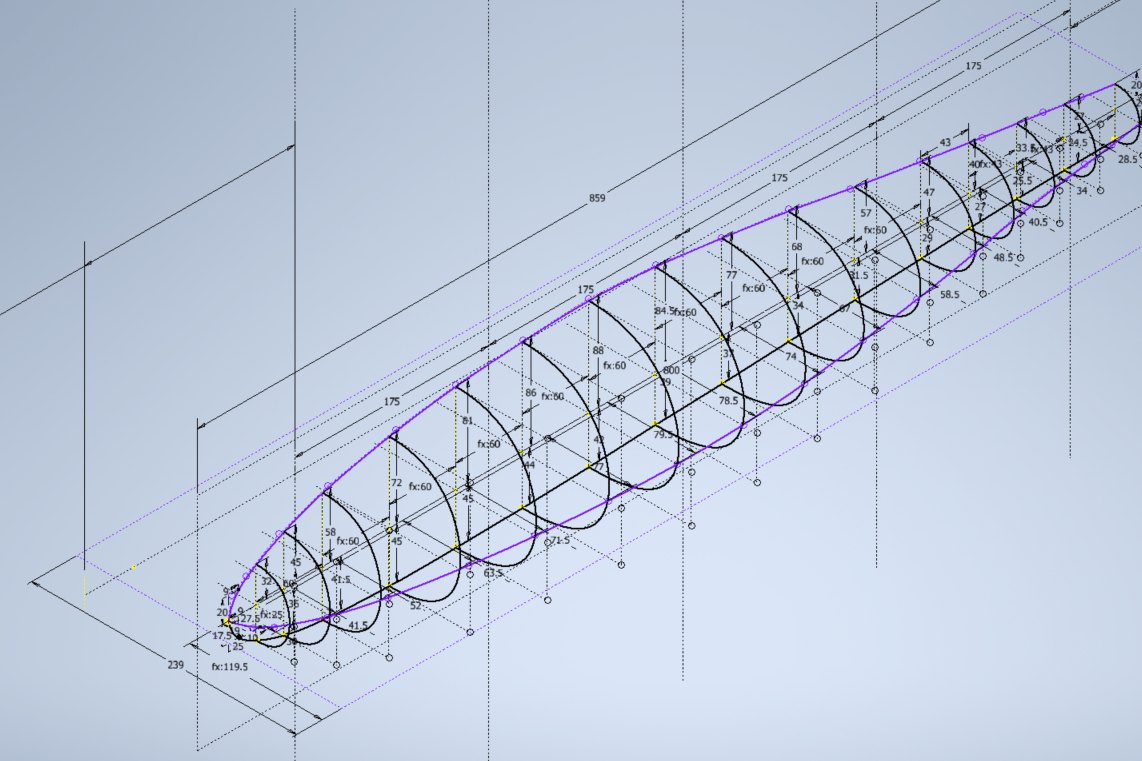
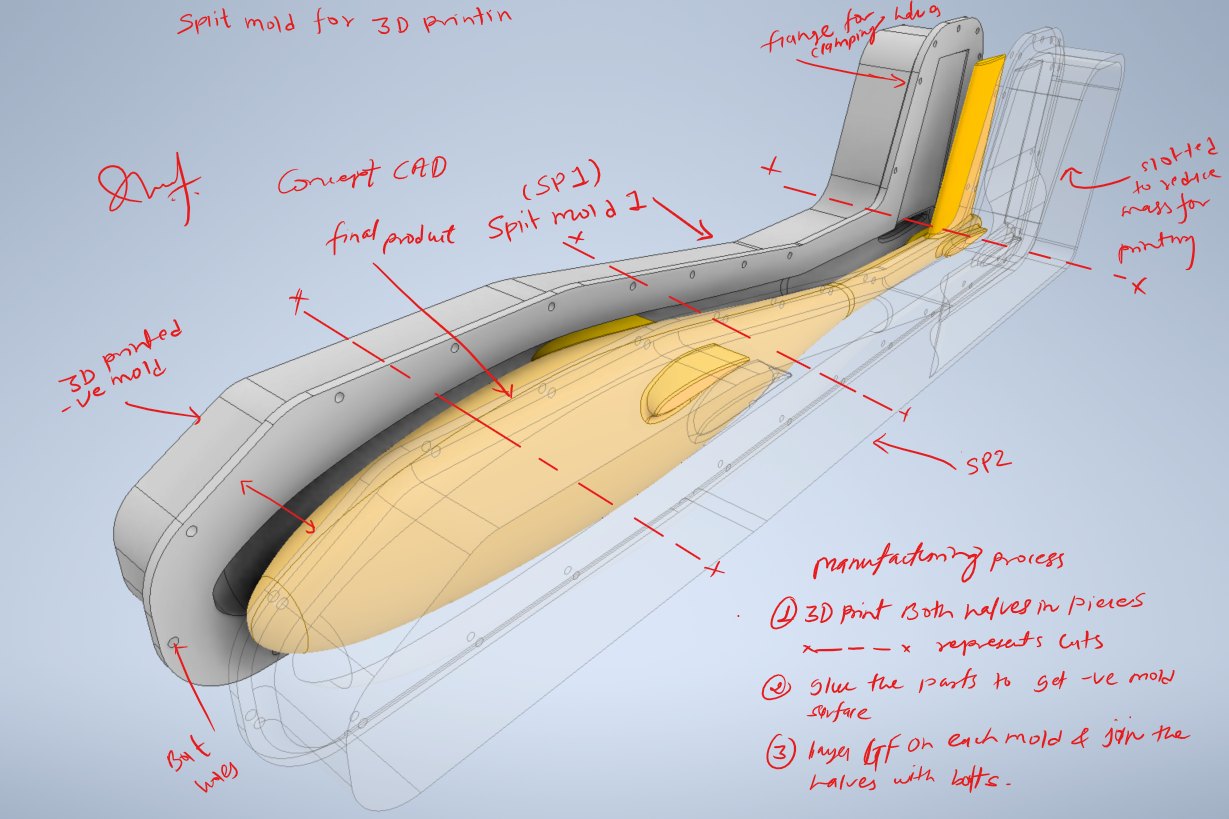
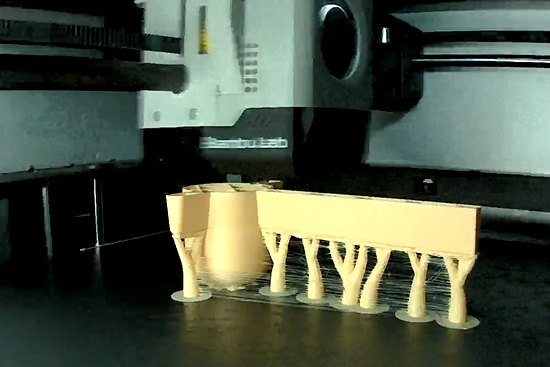
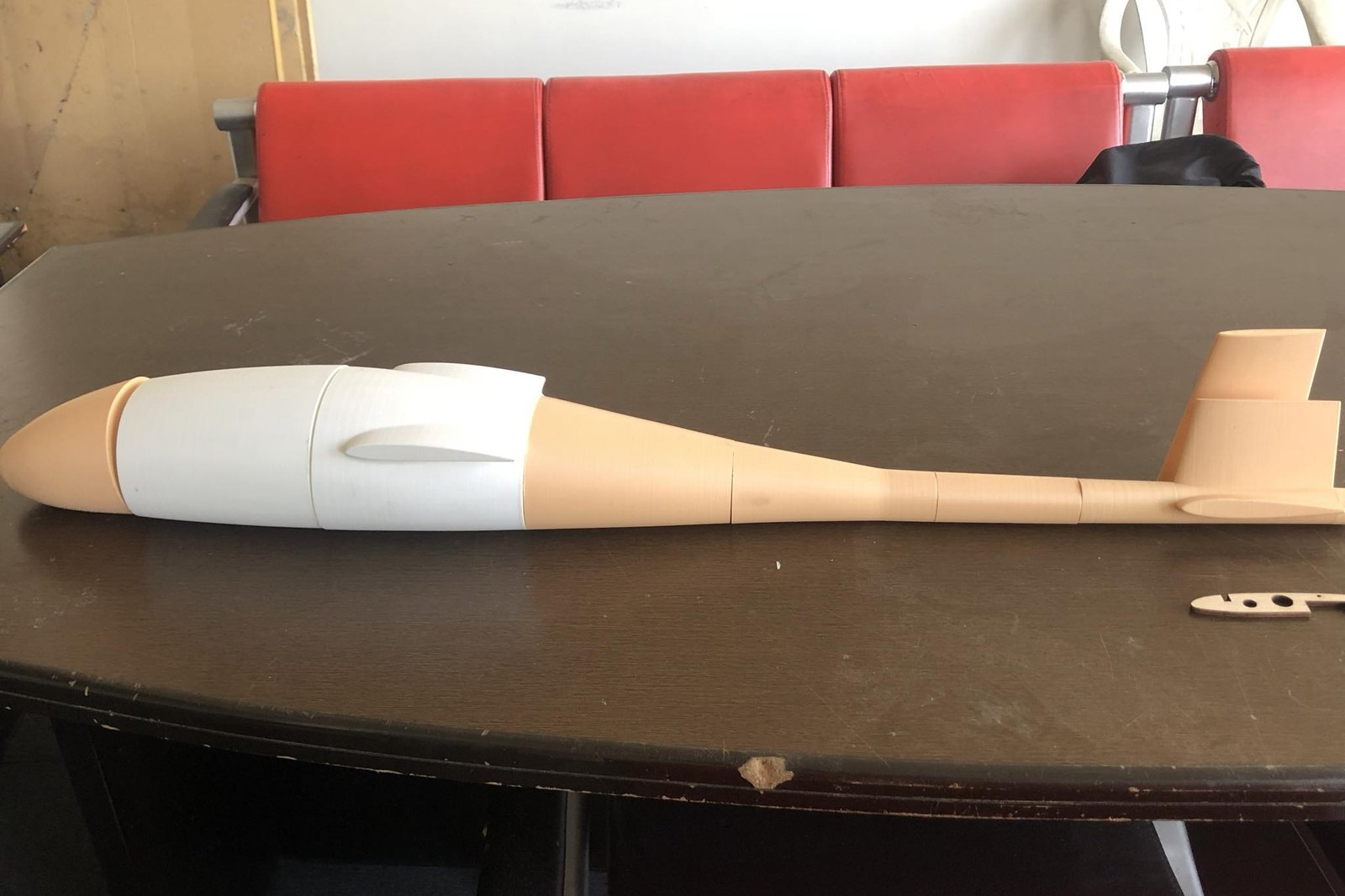
The fuselage started as a surface model built on a wireframe of cross-sections. Initial design sketches were developed alongside it, and the mold was visualised in CAD before the mold core, a positive of the fuselage, was sent for 3D printing.
Negative mold and layup
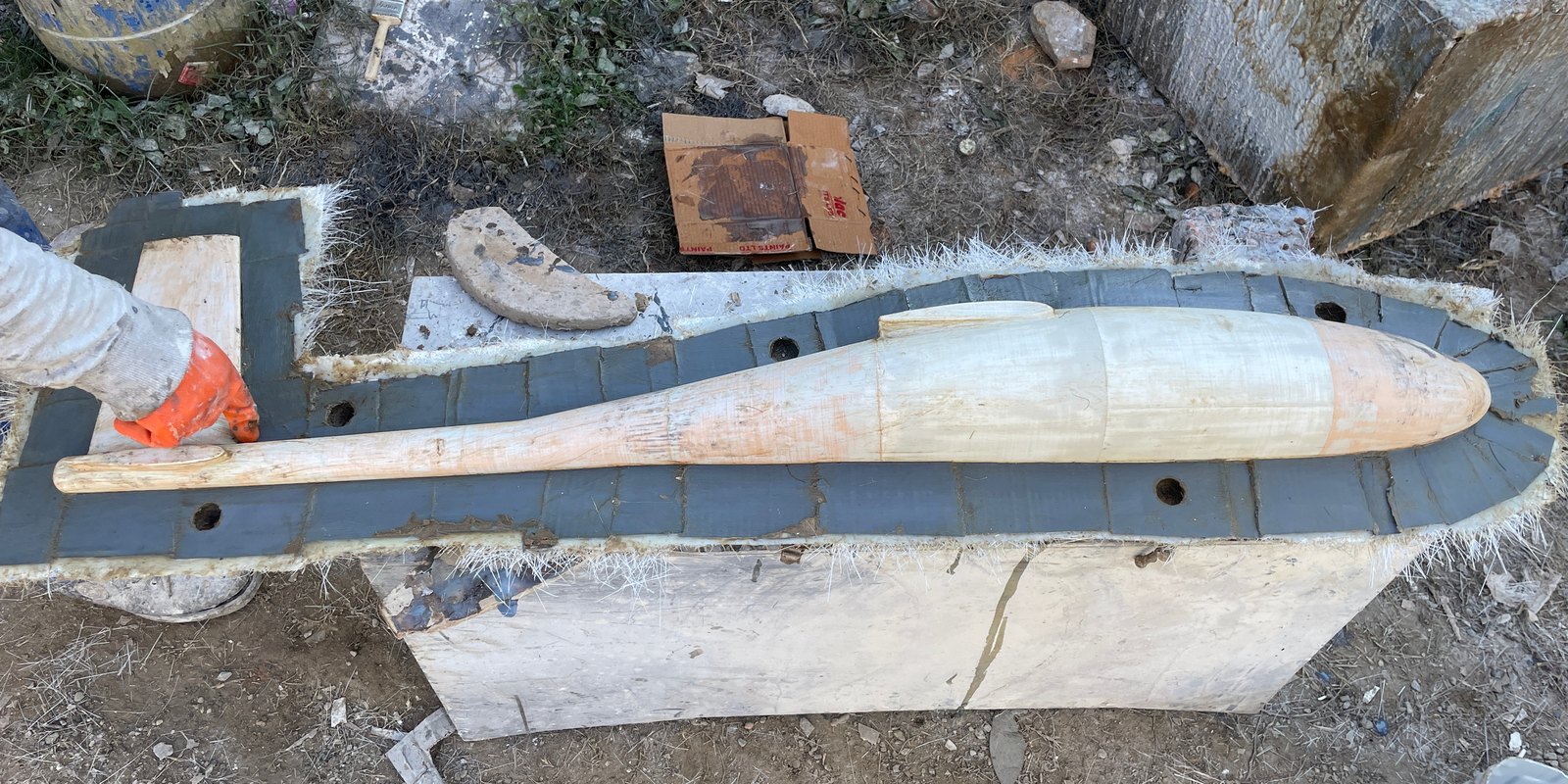
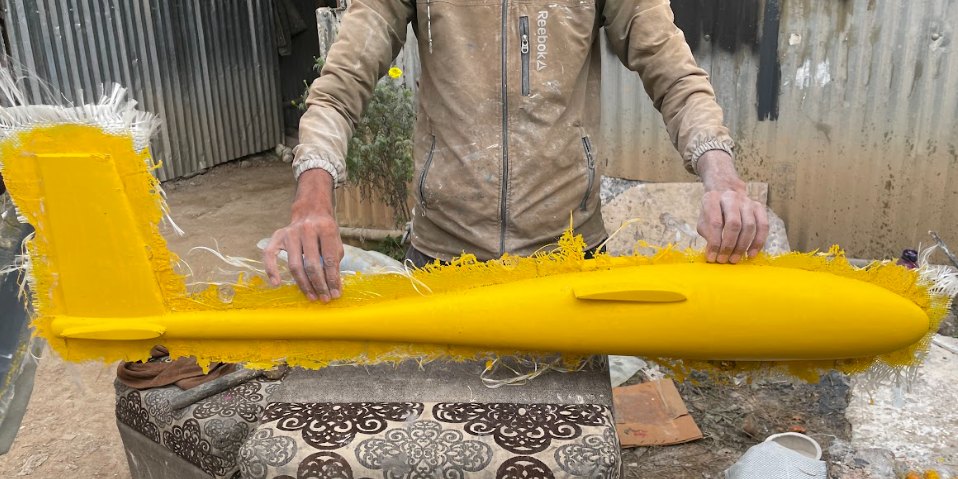
The printed core was used to pull a negative half mold, made from glass-fibre mat. That negative mold was then used to lay up the hollow monocoque itself in 250 GSM glass-fibre cloth. The demolded body comes out with the vertical stabiliser built in, plus mounts for the horizontal stabiliser and the wing.
The finished aircraft
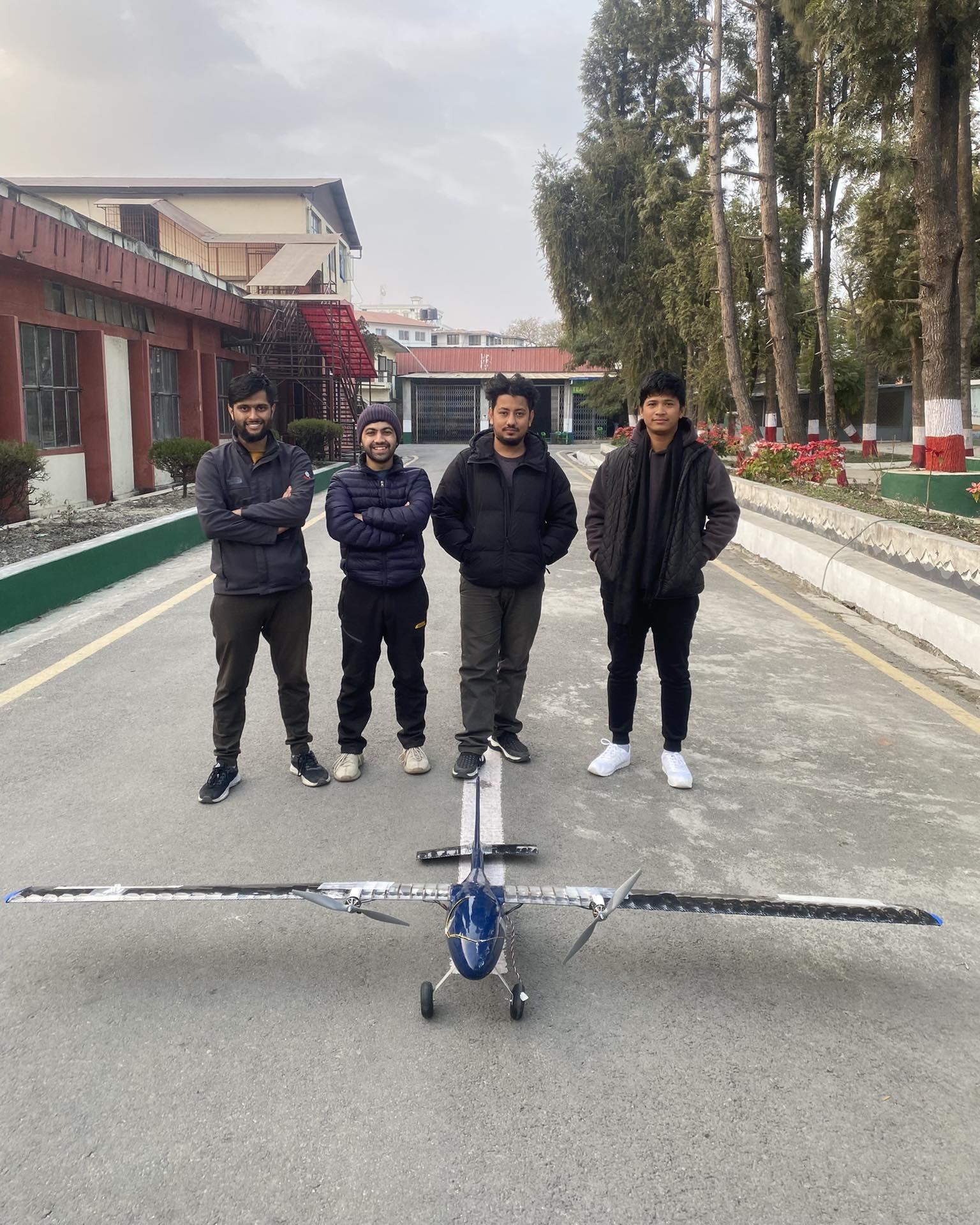
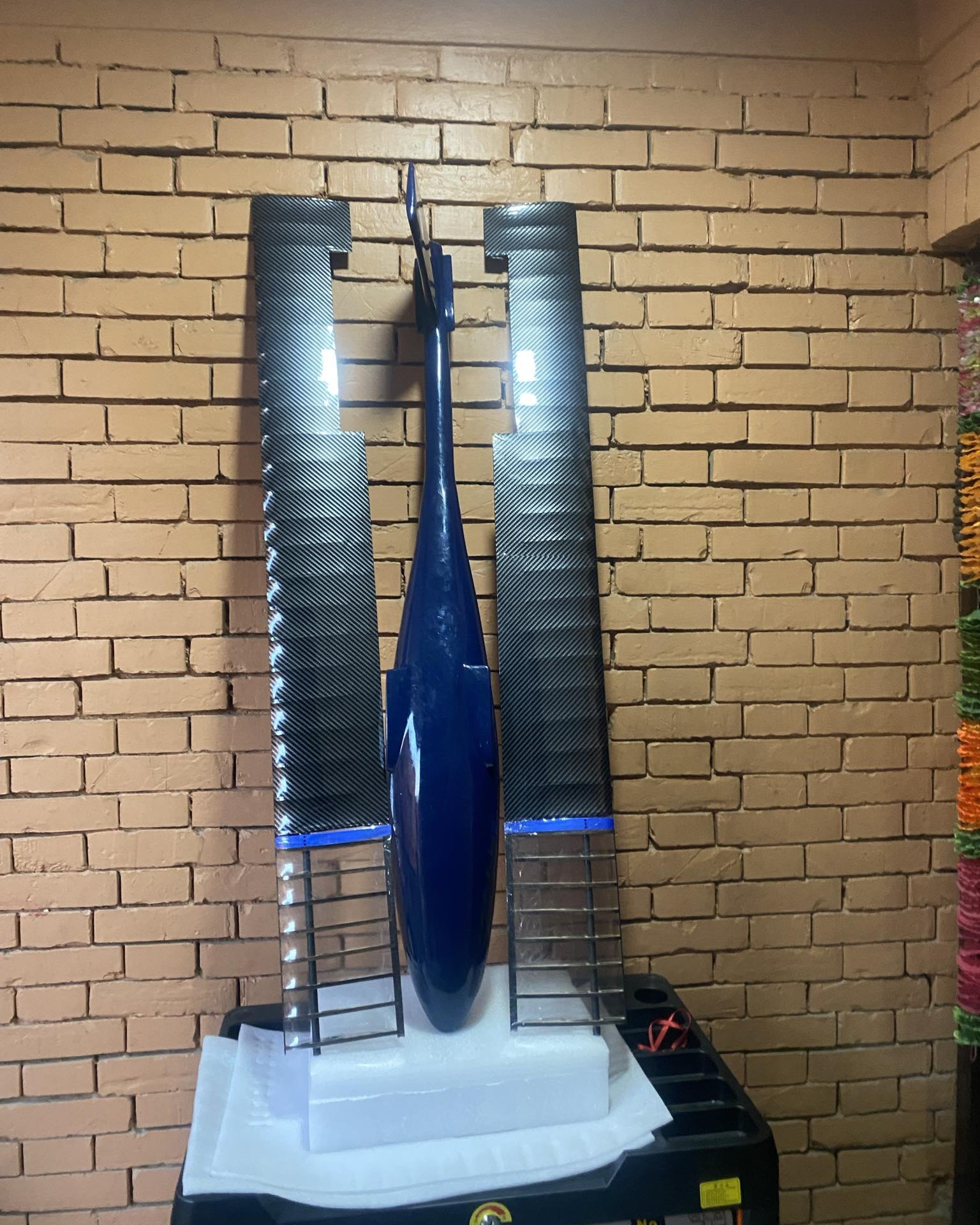
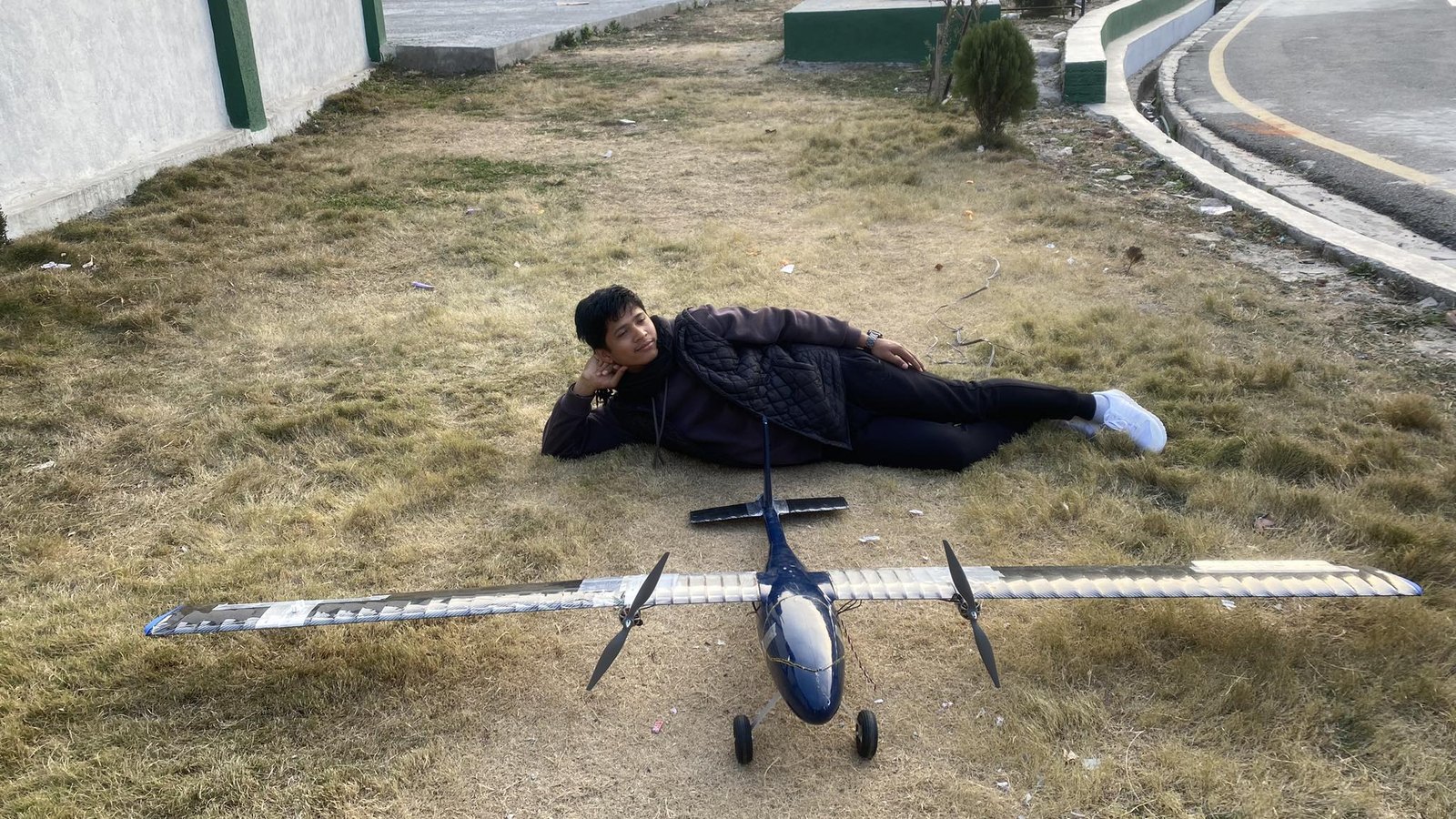
| Wingspan | 3000 mm |
| Body length | 1200 mm |
| Body weight | 2000 g |
| Skin | 250 GSM glass-fibre cloth, hollow monocoque |
| Tooling | 3D-printed mold core → glass-fibre-mat negative half molds |
Autonomous quadcopter
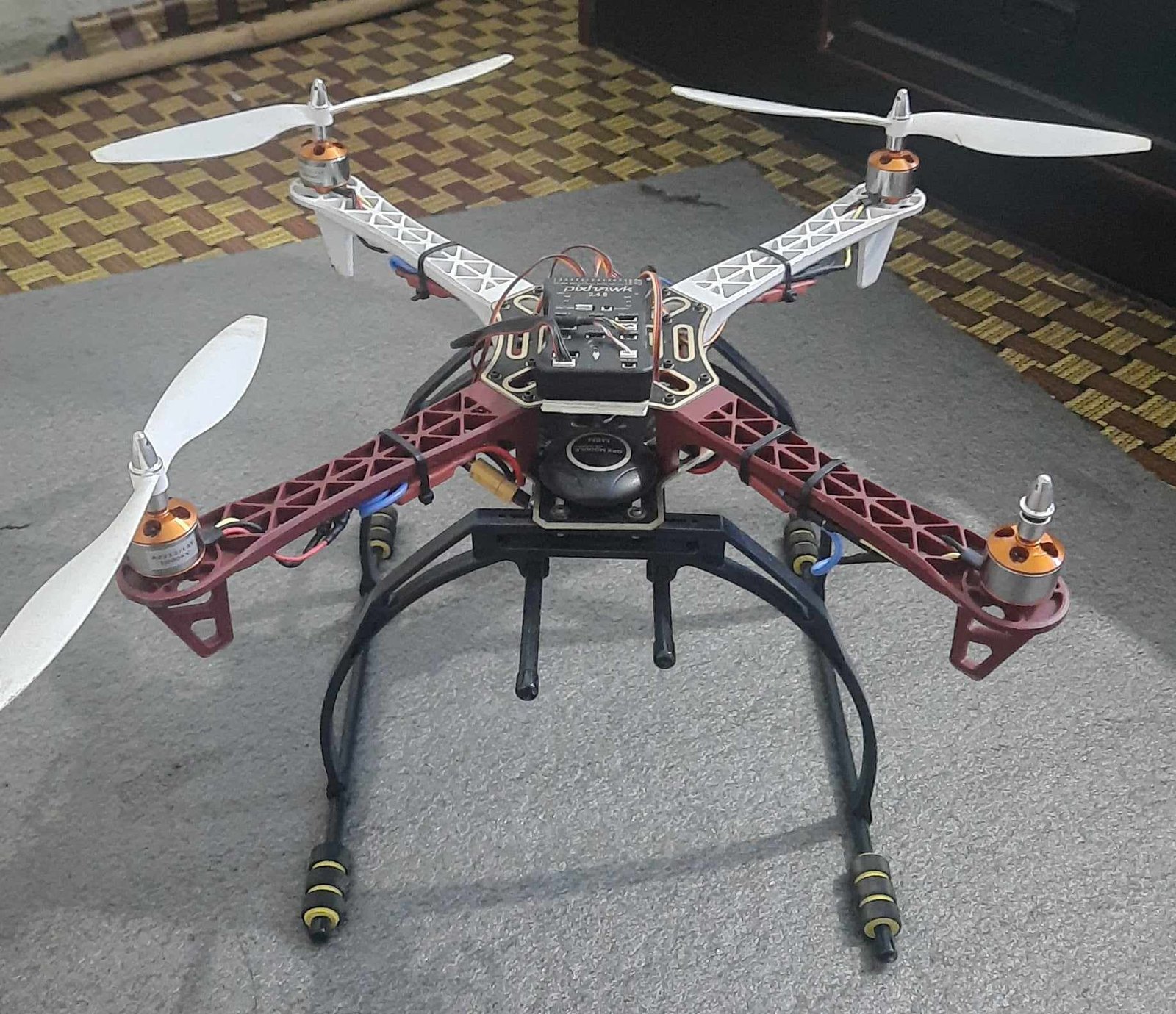
A Pixhawk quadcopter that flies manual and GPS-based autonomous missions.
This quadcopter runs on a Pixhawk flight board and can fly both manually and autonomously from GPS waypoints. It uses the same flight board I used for autonomous flight in the fixed-wing UAV of my final-year project (below), so with that experience behind me I built a quadcopter with flight-planning capability. It flew its planned missions without a problem.
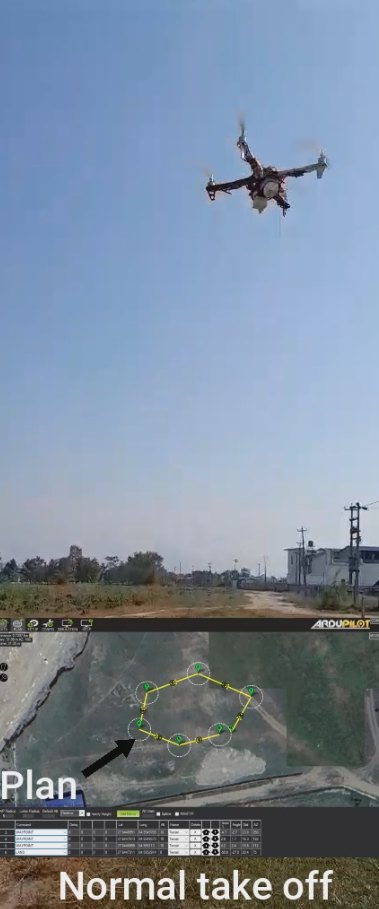
The project also got me looking past GPS: I learned about navigation in GPS-denied environments and explored other navigation techniques.
Outreach: the quadcopter was built for education. We used it for demonstrations to secondary-school students and presented it at an exhibition.
Final-year project — autonomous UAS for wildlife patrols
A locally built fixed-wing UAV to give national-park patrols cheap eyes in the sky.
The idea came from a visit to a national park, where we learned how important the imported drones that had been deployed there were to the security teams. Our final-year project set out to build a locally produced autonomous UAV that could give security personnel the same kind of aerial support on patrol, at much lower cost.
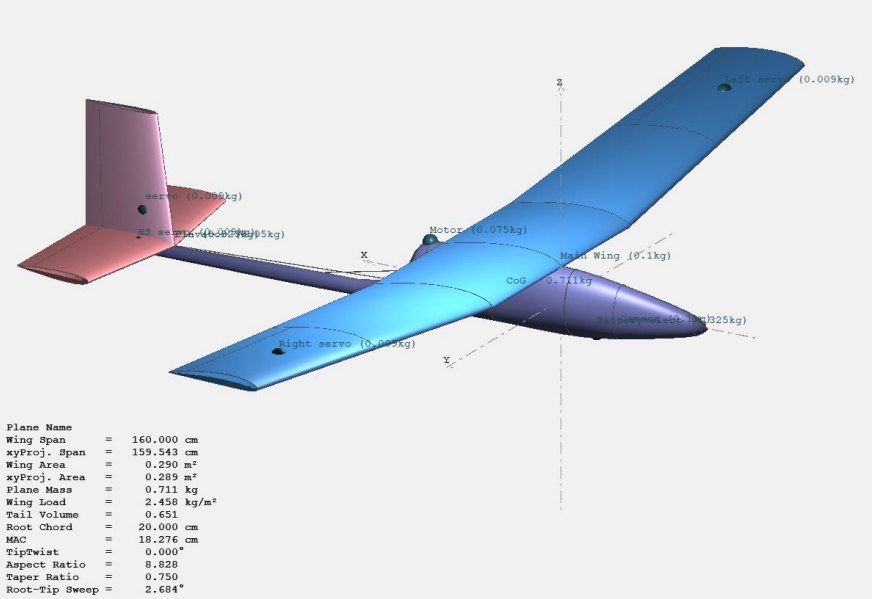
Design and stability in XFLR5
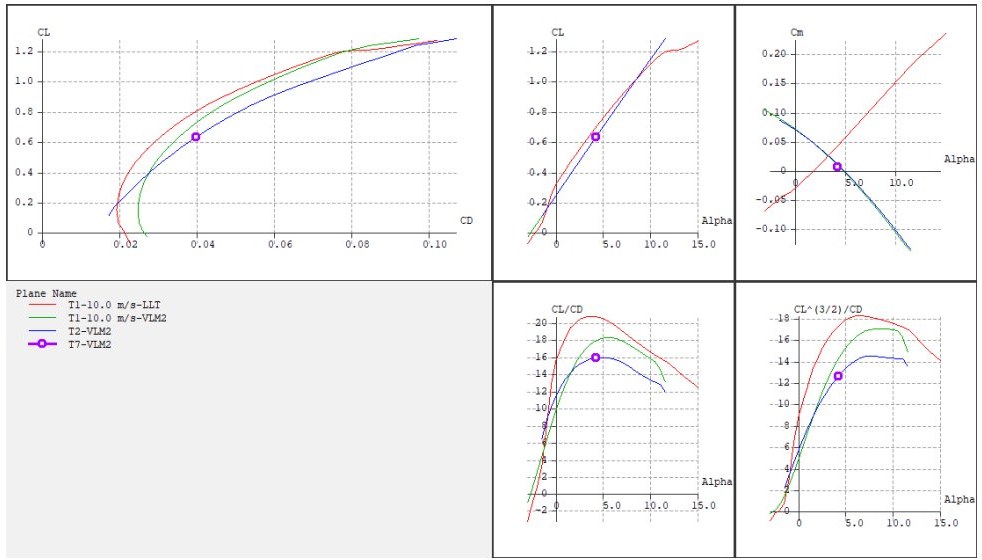
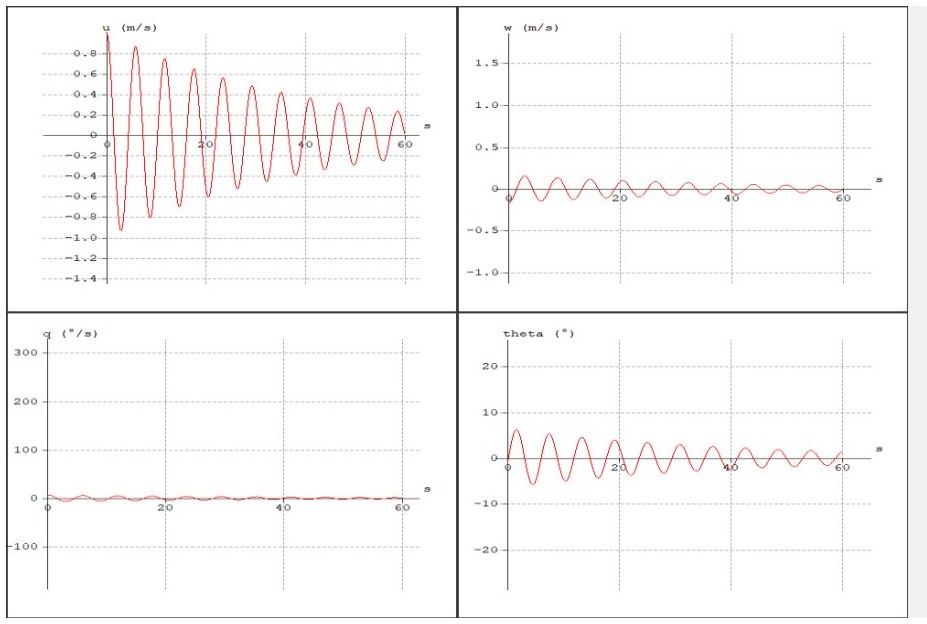
The conceptual design modelled the fixed-wing aircraft at real size, with the mass distributed through the body and the other model parameters defined. Using XFLR5, we confirmed both the static and dynamic stability of the aircraft. Only once stability was confirmed did the project move on to building and testing a prototype.
Prototype, programming and flight testing
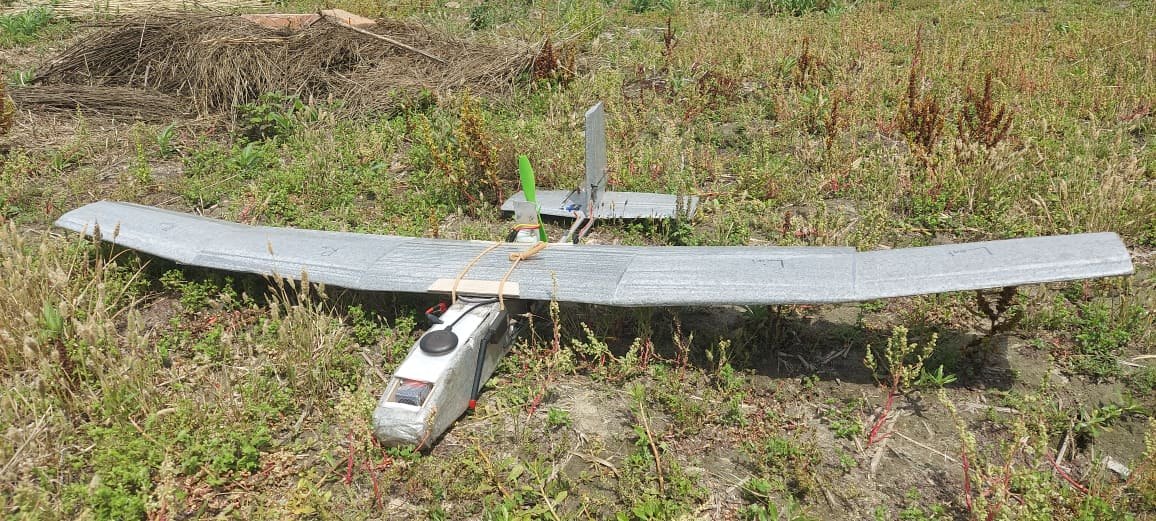
After building the prototype, we programmed the Pixhawk flight board and tested it for autonomous flight. Telemetry and GPS antennas on the aircraft handled data acquisition and navigation. Path planning was uploaded with Mission Planner, which gives a visual of the mission along with key flight data such as terrain altitude.
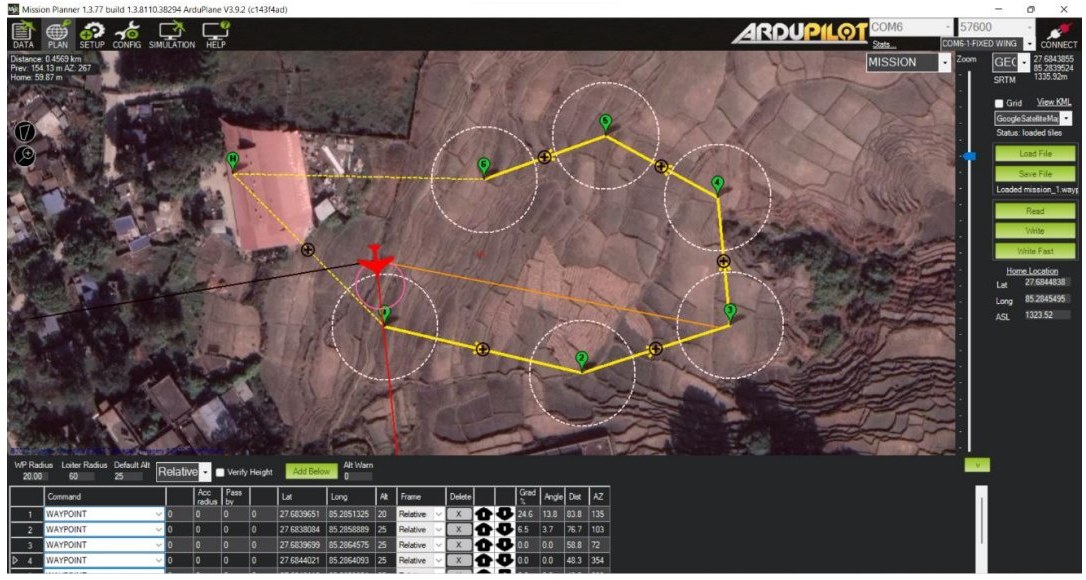
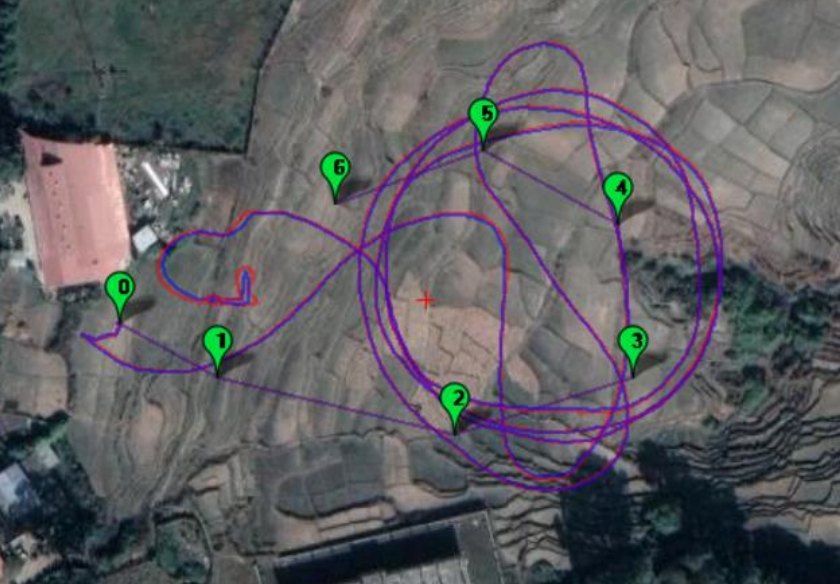
Real-time telemetry was recorded and then pulled from the onboard data logger. That let us analyse the flight path and judge how well the flight board carried out the mission it was given.
Outcome: this prototype became our test mule for more than 20 flights, and those flights gave us the data we needed to improve the mission planning and tune the flight board.
Boeing Aeromodelling Competition, IIT Bombay
2019 as a competitor, 2023 as a mentor.
2019 — competitor
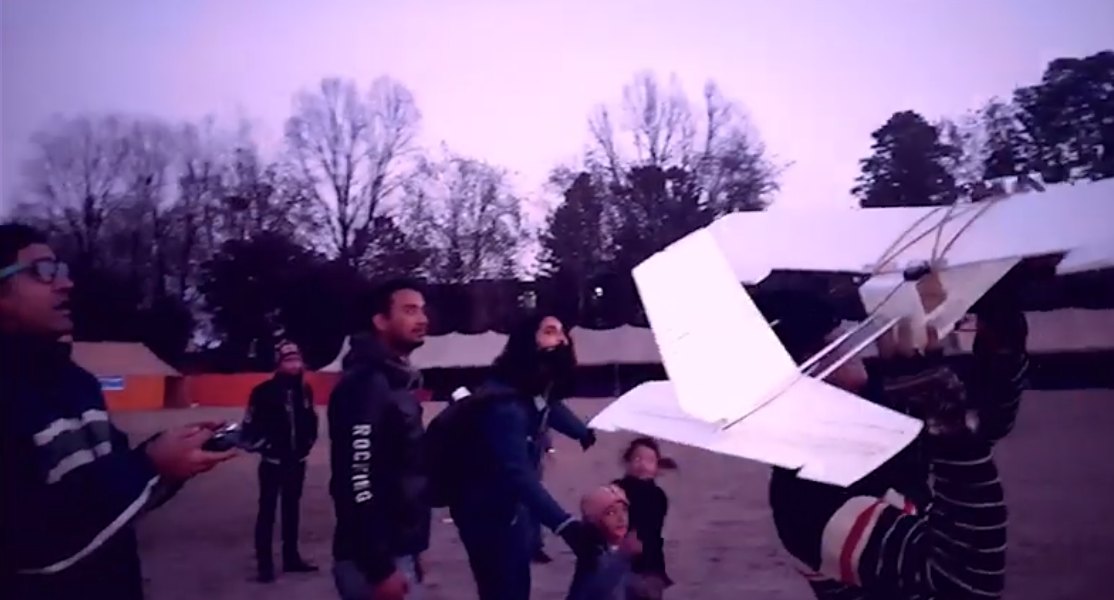
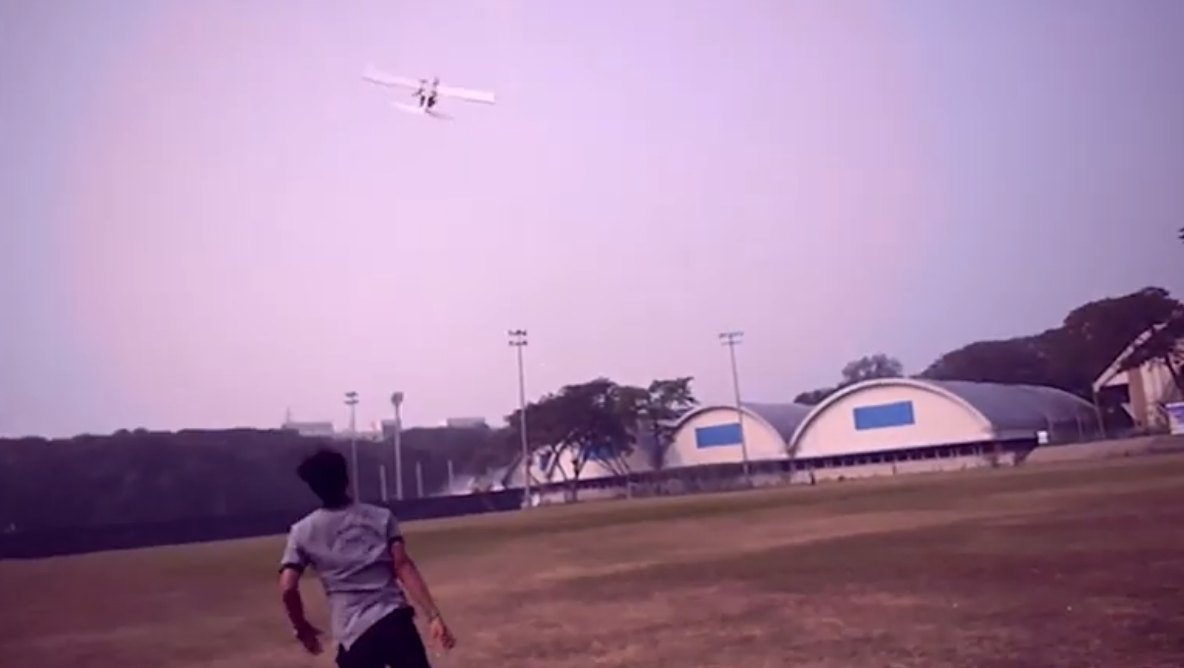
The Boeing Aeromodelling Competition at IIT Bombay in 2019 was my first international event, and our team finished in the top 20. It taught me a great deal about aircraft design, flight dynamics and how aviation really works. It's also why I went on to take electives in aircraft structure design, aircraft dynamics and avionics, and it led directly to our final-year autonomous wildlife UAV.
2023 — mentor
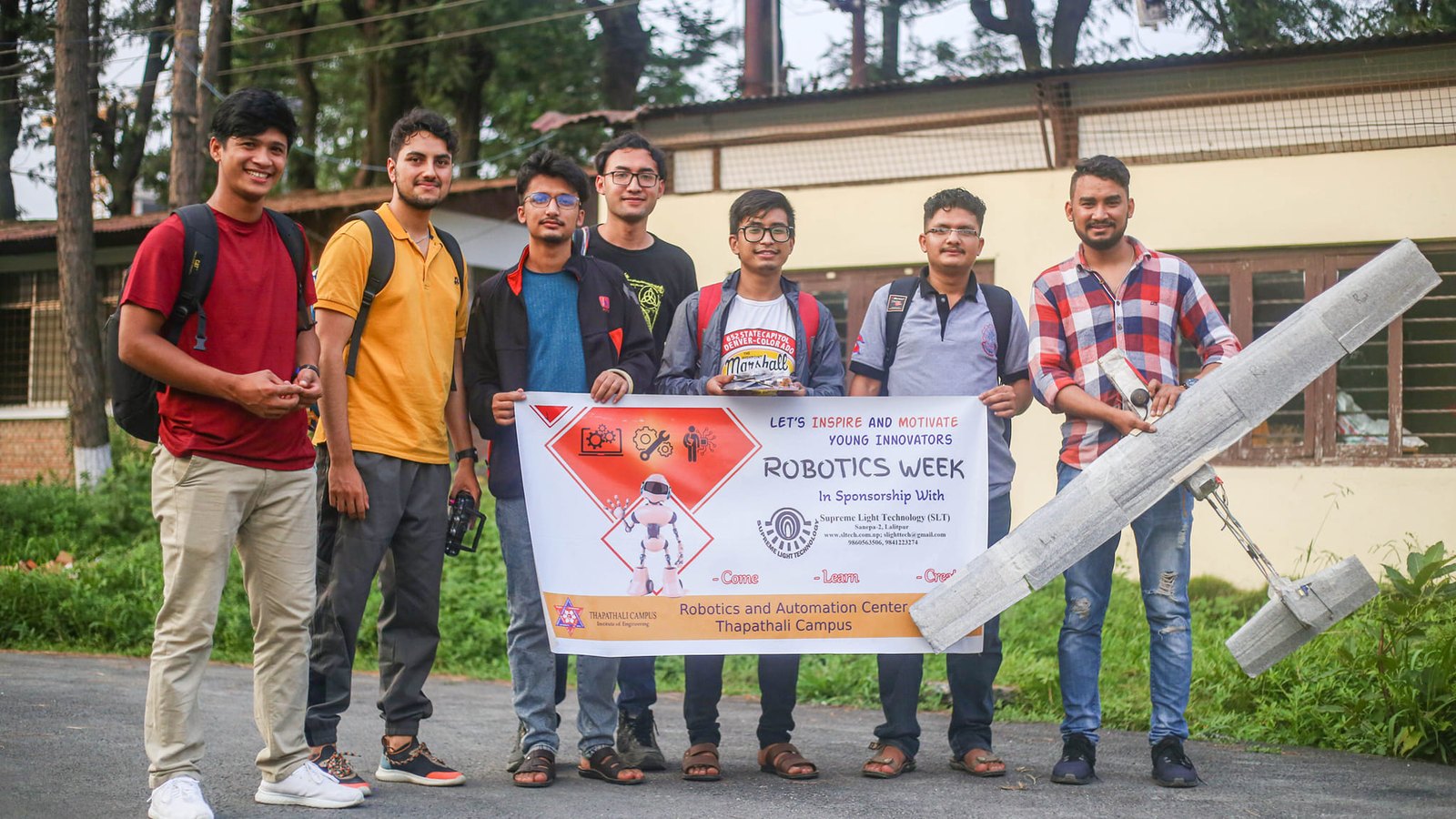
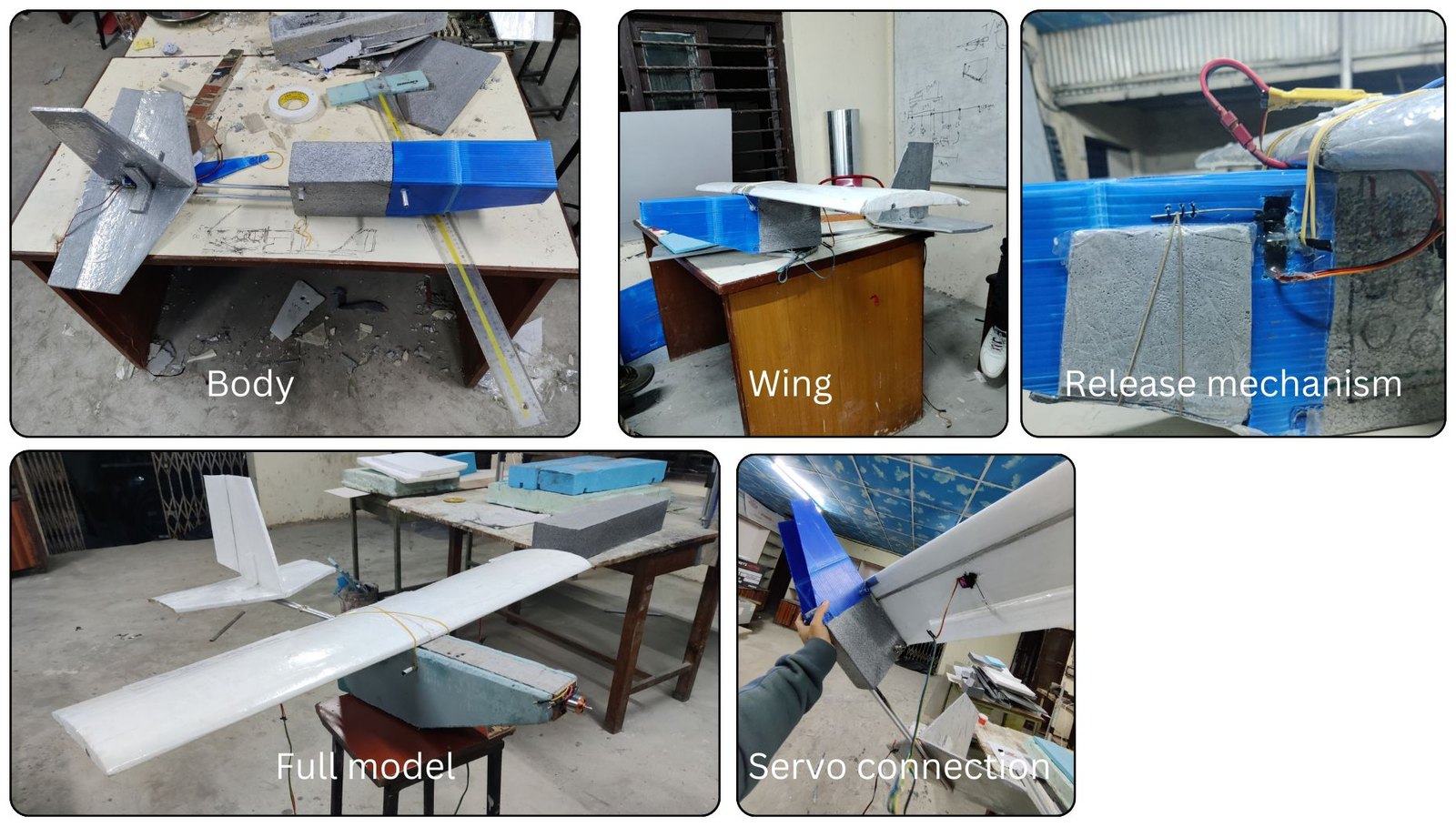
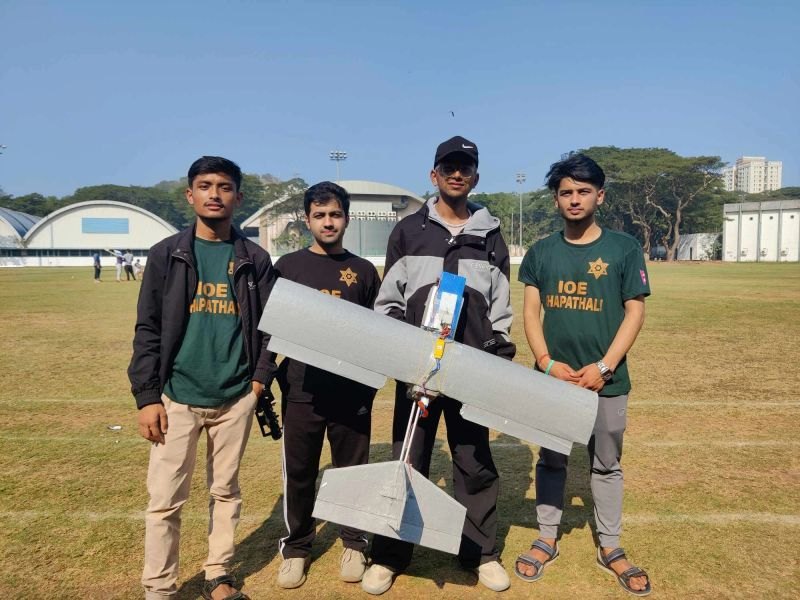
After graduating, I got the chance to mentor aeromodelling on campus and supervised undergraduate students for the same competition in 2023. My team finished 4th, carrying a 600 g payload, and earned a lot of appreciation from the campus.
What I took away
- Prove stability before you build. On the wildlife UAS, nothing was cut until XFLR5 showed the aircraft was statically and dynamically stable.
- Tooling is half the part. For the monocoque, the quality of the fuselage came down to the chain from CAD surface to printed core to negative mold.
- Fly a mule, read the logs. Twenty-plus test flights and the onboard logs, not the plan on screen, are what tuned the flight board and improved our missions.
- One flight stack, many airframes. The Pixhawk experience from the fixed-wing UAS carried straight over to the quadcopter.
- Competitions compound. One competition in 2019 shaped my electives and my final-year project, and later let me mentor a team to First Runner-up.
Files & links
Flight video and where to find more.